Raising my Family at Cobb Hill Cohousing

by Lilah

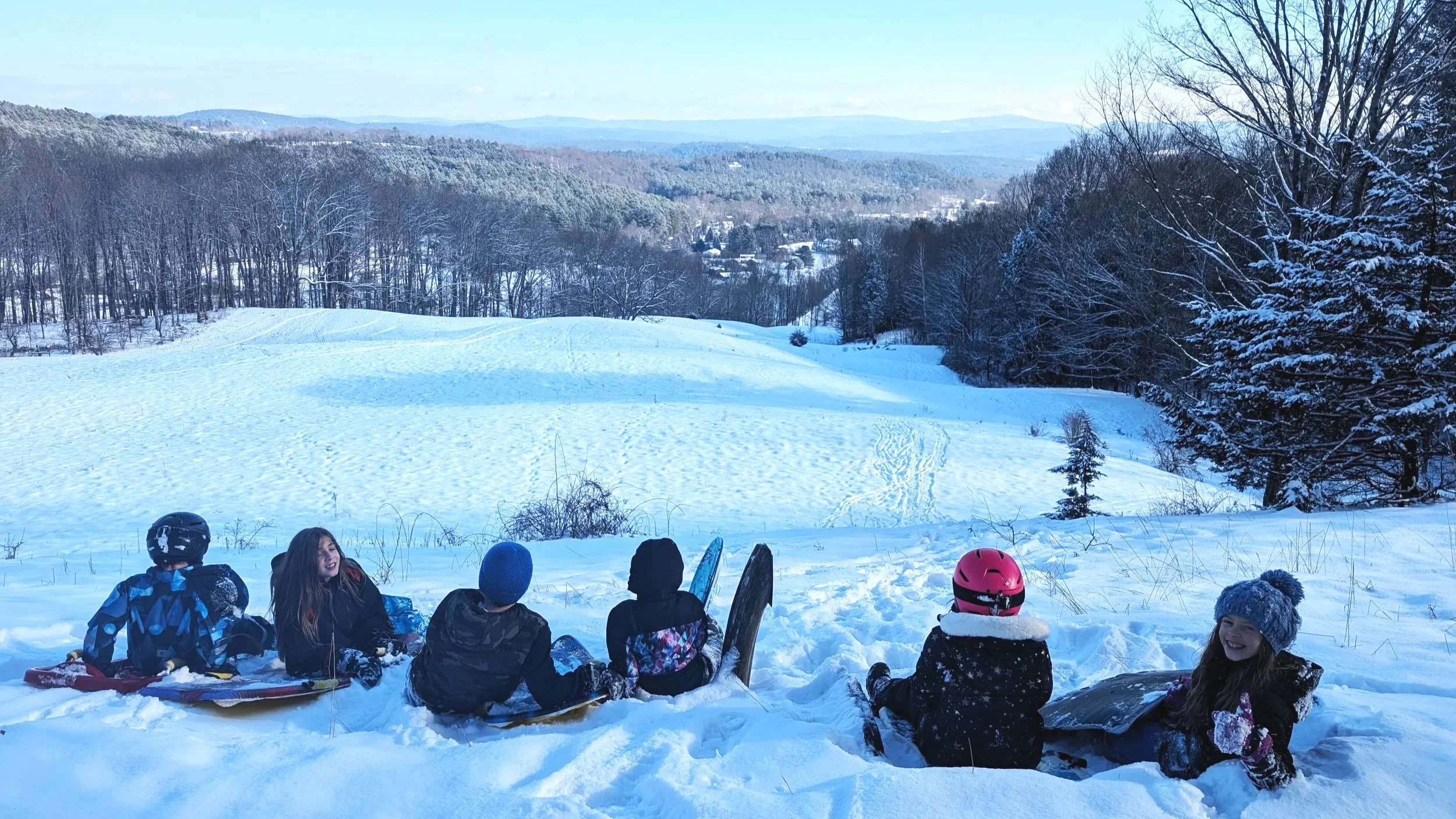
Moving from the suburbs of Boston to an intentional community in rural Vermont was a decision driven by many factors including wanting to be closer to nature and farming, choosing a more sustainable lifestyle, desiring community living, and prioritizing a healthy place for my children to grow up. The African proverb, "It takes a village to raise a child," is a needed antidote to a growing crisis in modern family living where parents are increasingly isolated due to a culture and economic system that has dispersed families and made obsolete the deep intergenerational connection to the land. While community living is not a utopia, it affords many benefits to not only the individual families, but also supports intergenerational relationships that are missed in the modern drive for over 55+ gated communities.  

Family life at Cobb Hill in many ways is not so different from a close-knit neighborhood. Some of the differences are more subtle, but permeate life on the Hill. The design of the physical space prioritizes walkways and ample greenspace, with parking on the periphery, making space for safe play surrounded by beauty with twenty-three households keeping an eye on the young intrepid explorers. It is not uncommon to see residents taking the time to connect with the younger members of the community to talk about what's in their garden, activities at school, or connect with a furry loved-one. Some of the benefits are not unique to Cobb Hill, but a throwback to a more simple time, where kids roam freely and come back when it gets dark or having a carpool and phone tree for group pick up from the various local school activities.

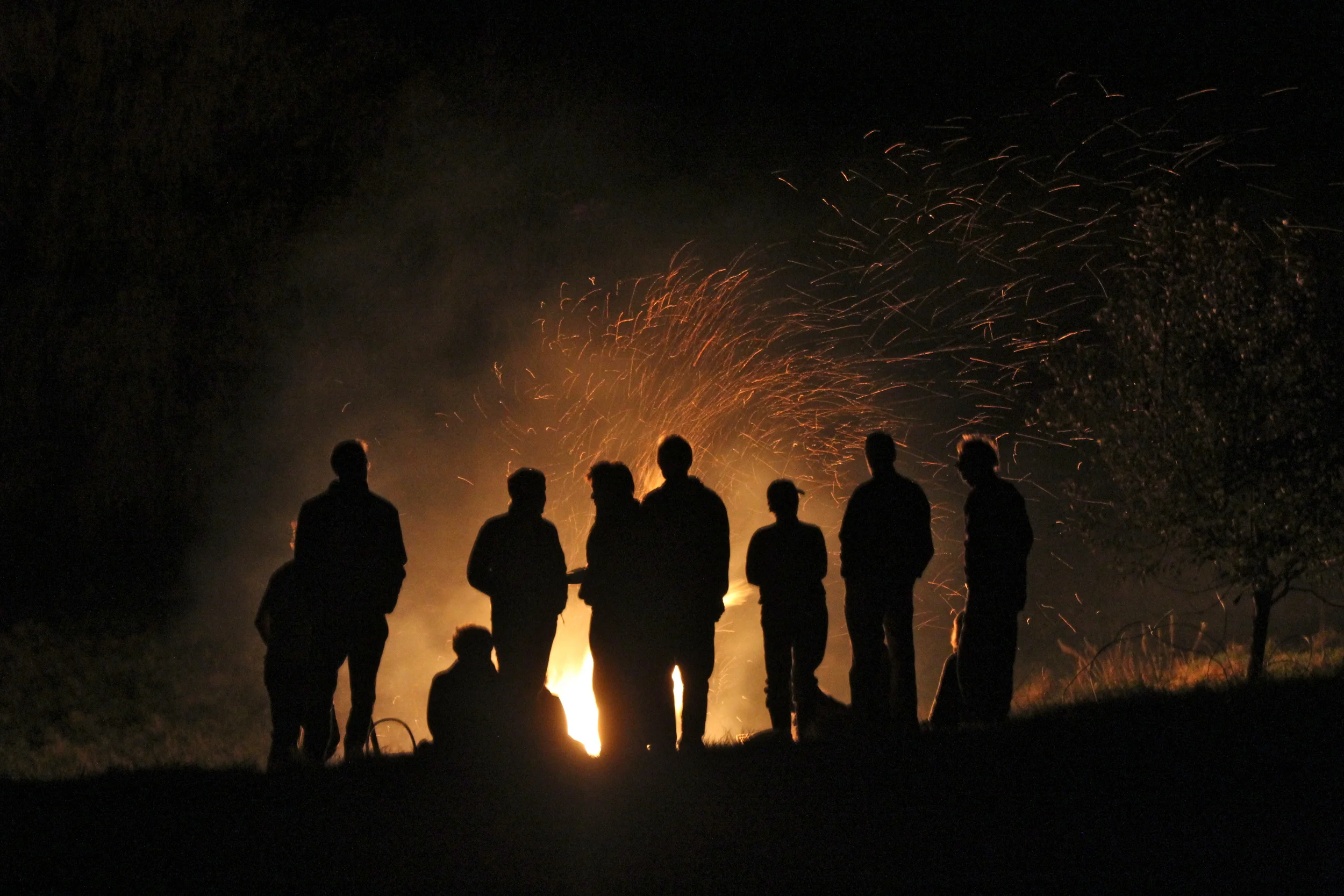
For me personally, there are a number of opportunities of living in a community that are especially beneficial for families with kids. During our monthly work day, children can participate with the adults to help complete needed community projects. I love watching my kids go off confidently with other adult community members to stack firewood, cook in the kitchen, remove invasive plants, and other needed tasks. There are also a number of important community and committee meetings at the common house, which is just a stone's throw from my home. This allows me to participate in meaningful ways, while my kids are either safe at home or playing in the common house during those meetings. Building ritual activities is another plus, such as an annual Halloween party, New Year's Eve potluck & dance celebration, community summer camp, Memorial day potluck, 4th of July potluck and celebration, and other family-friendly events that deepen ties through shared meaningful experiences. Cobb Hill, like any other place where humans reside and interact, still has to deal with the challenges of interpersonal conflicts and disagreements. Thankfully, we are actively working on our interpersonal skills and address conflicts where possible. It is a work in progress, but worth the effort.

Over the years, life on the Hill has evolved with the individuals who have come and gone, bringing their unique gifts and offerings to the community. Life at Cobb Hill is a place where collective benefits come from what you put into it, from an active 4-H program that connects youngsters to agricultural skills, to volunteers who share their time to build native bees and bird boxes, and mentors who connect our next generation to the skills needed for a future aligned with nature and human-scale living. It feels bountiful to live at Cobb Hill and I am grateful to have the opportunity to grow as a person and watch my children thrive in community.
Animal Menagerie

by Lilah

Spring is a time for babies on the farm, inviting the curiosity and attention of the children on the Hill. What a wonderful way to celebrate the annual pulse of new life than to tend to our community's newest furred and feathered friends. Kerry, of Cedar Mountain Farm, runs the community 4-H program, where children from both Cobb Hill and the surrounding towns come together to care for Jersey calves and practice the 4-H values of Head, Heart, Hands, and Health. Our community has also recently welcomed a litter of piglets being raised by Zander out in the farms’s silvopasture and a clutch of new chicks to be added to the flock after they mature this summer.

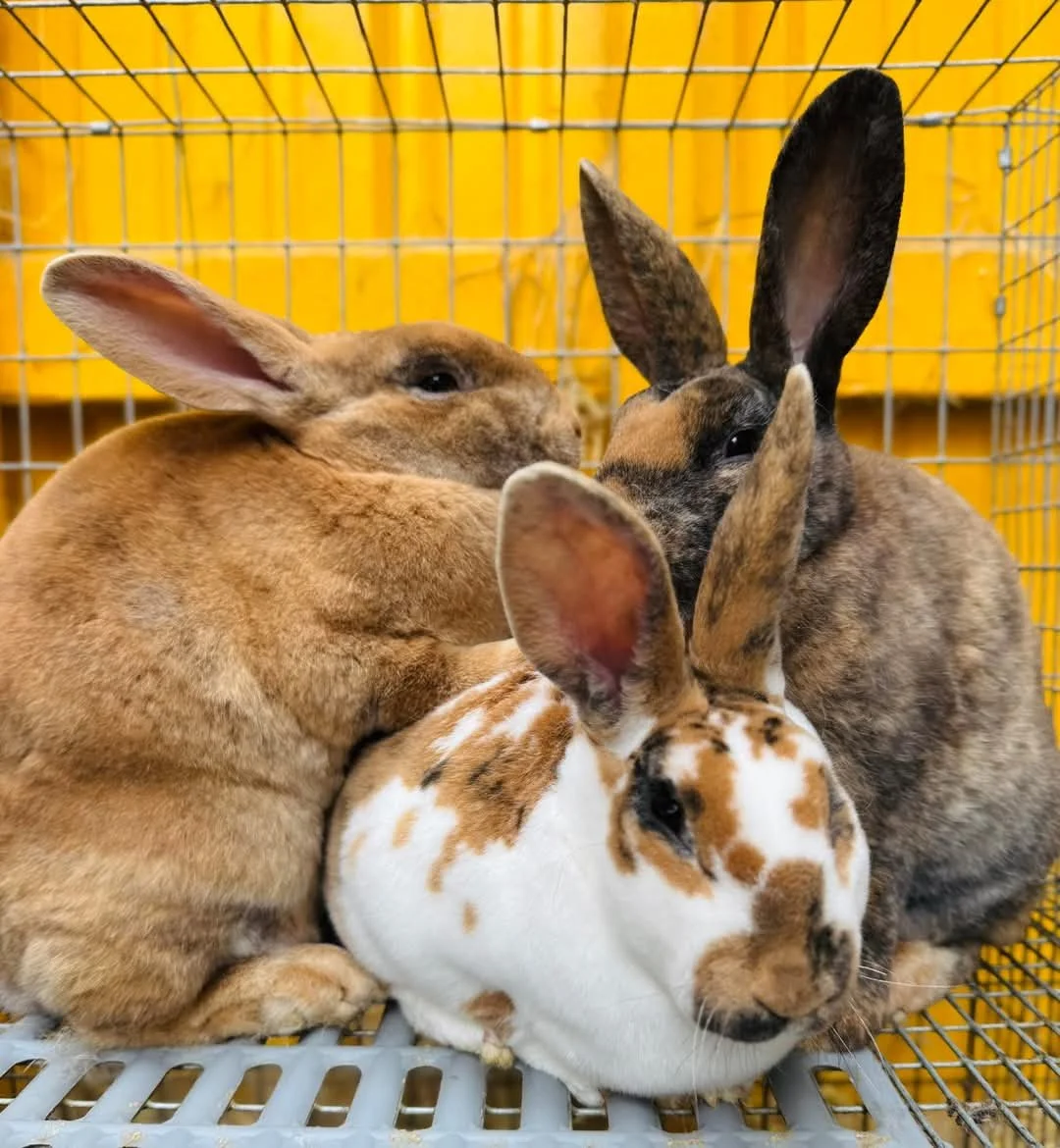
In our newest animal adventure, volunteers built a rabbit room in the barn and purchased four 6-month-old rabbits for families and their children to look after and potentially show at 4-H events. It brings me great joy to see little hands cradling warm silky bunnies in their laps and feeding them fresh greens from the garden. In addition to domestic duties, our children also spend time petting and indulging the cats and dogs roaming the paths looking for affection. While adventuring in the neighborhood, kids can also be found delighting in the grubs, caterpillars, pill bugs, ants, nesting baby chicks, and fat worms wiggling in the loamy earth.   

By collectively caring for our friends on the farm and being present to the natural world, we practice the three pillars of Cobb Hill: local agriculture, sustainability, and community. In sharing responsibilities, children and adults alike participate in intentional land and animal care that both feeds the soul and body.  

"When we see land as a community to which we belong, we may begin to use it with love and respect.”Aldo Leopold

A Home with a Heart: Reflections from Beth and Phil

At Cobb Hill, our homes are more than just buildings—they’re woven into the story of the land, the people, and the values we share. This month, we want to highlight a very special home now for sale—not by listing specs and square footage, but by sharing the heart behind it.

Beth and Phil, two of Cobb Hill’s founding members, have lived in this home since the very beginning. They helped design not only the house itself, but also the gardens, systems, and spirit of the community around it. They raised their two daughters here, who are now full grown and living their own vibrant lives. Their family's presence is felt in the stones of the path, the soil of the garden, and the culture of care and cooperation that defines life here.

We asked them to reflect on what this home has meant to them, and what they hope it might become for someone new.

Interview with Beth and Phil 

1. What originally drew you to help create Cobb Hill, and what were your hopes for the kind of community it would become?

So much of what drew us to the vision of Cobb Hill (long before it was called Cobb Hill or even before we knew it would be on this piece of land) is here today. The idea of community, of having others to share work and fun and learning with. The idea of sustainability of making it easier to live within the Earth’s limits. Whether it’s the PV panels on the barn or the way our passive solar super-insulated home is so cozy on a freezing winter day, it has been a delight to experience that vision of more sustainable living as part of our daily life here. Another thread that has been so important to us from the start is the commitment to making decisions by consensus. While it hasn’t always been easy, it’s been an honor and an inspiration to be part of a group that is trying to operate in a way that includes deep listening, mutual respect, and a shared search for wisdom.

And in fact, because these initial values that were so important to us in the early days are alive and well today, although we are selling our house, we intend to remain a part of Cobb Hill, moving to a different home that is still a part of the whole ongoing experiment!

2. What did this home mean to you during the design and building process—and what intentions or hopes did you pour into it at that time?

Looking back, we never really thought of the design decisions for the home separate from the design of all of Cobb Hill. That was partly practical since we were figuring everything out at once - the site map, the common house design, the governance structure. But also the homes were never meant to stand alone - there are so many shared systems, and we have the common house as an extension of our own homes. We did make a few choices that stood for our own values as a couple within the wider set of values of the community. We chose a duplex for more neighborly connection and because it was more efficient with materials. We chose the smaller footprint option to try to minimize costs and our environmental impact. And we chose the location on the site because it had an inviting spot for gardening - a garden that helped feed our family for many years and is now full of perennials, berry bushes, and more.

3. What have been some of your most meaningful experiences living here—moments that felt like “this is why we built this”?

That’s a long list. Some big accomplishments like finding a way to add solar panels to the barn roof or watching the level of invasive species reduce a little bit because of our work. But also little moments - snowshoeing in the moonlight, watching our kids pile into the car with our neighbor Marie who wanted to share her love of opera. Enjoying how our daughters almost had an honorary brother in the son of our duplex mates, watching our kids develop a love of food and farming that has shaped their lives as adults.

4. What makes your home—and its place in the community—special to you?

Each Cobb Hill home is special. Each has a little bit of a different angle on the sunrise, a little more or a little less elevation. Some things we’ve enjoyed about this house are how close it is to the common house and barnyard making it easy to feel a part of things, and how many gorgeous sunrises and rainbows we’ve seen from our deck on the east of the house. We’ve also had such enjoyment improving the soil in the gardens around the house and establishing herbs, flowers, berries, and fruit trees so that there’s beauty to enjoy and often tasty things to harvest.

5. What kind of person or family do you imagine thriving in this home and community next?

The possibilities are endless. This was a great home for us to raise a family in, a family inclined to many projects - homeschooling, big groups of wandering kids, food preserving, crafts and hobbies, and lots of cooking. The house, while one of the smaller units at Cobb Hill, seemed to hold it all well. But who knows, maybe the next person to own the house will be a single cello-playing knitter or a grandpa with two cats who translates Japanese poetry. The lucky thing is, since we are sticking around, we will get to find out!